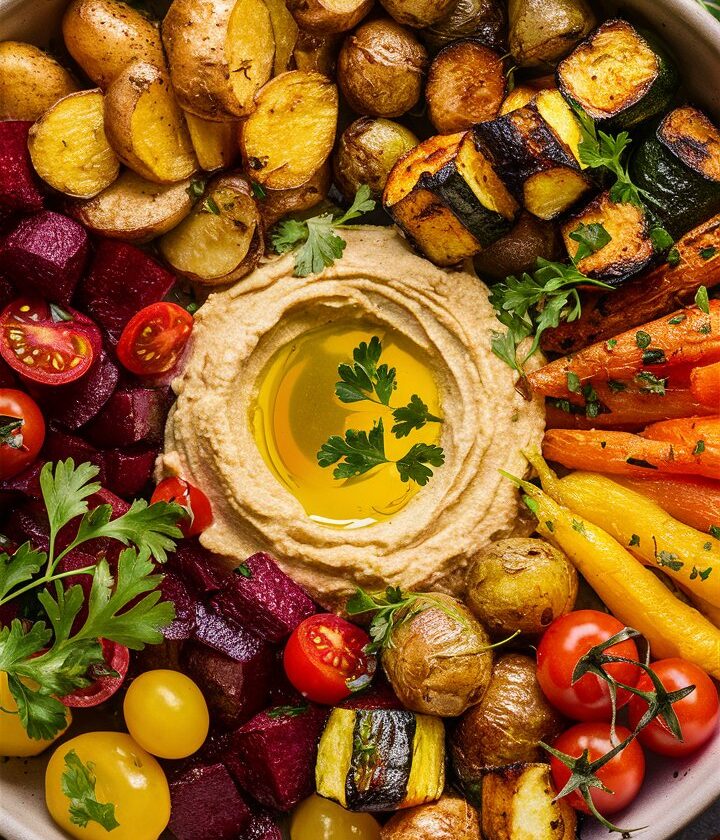
When it comes to wholesome meals that strike the perfect balance between flavor, nutrition, and simplicity, few dishes shine as brightly as the Roasted Veggie and Hummus Bowl. This vibrant and customizable recipe has become a favorite for health-conscious eaters, meal-prep enthusiasts, and anyone who craves a colorful, nutrient-packed dish that doesn’t compromise on taste.
In this complete guide, we’ll explore everything you need to know about this delicious bowl—from its origins and nutritional benefits to step-by-step instructions, ingredient variations, serving tips, and storage methods. By the end, you’ll have a comprehensive resource that not only helps you make the perfect Roasted Veggie and Hummus Bowl at home but also inspires you to get creative with endless variations.
Why the Roasted Veggie and Hummus Bowl Deserves a Spot in Your Weekly Menu
Before diving into the recipe, it’s worth understanding why this bowl has captured the hearts (and stomachs) of so many.
- Nutrient-Rich and Balanced
- Packed with fiber, plant-based protein, vitamins, and minerals.
- Offers a balance of complex carbs, healthy fats, and protein.
- Customizable for All Diets
- Naturally vegan and gluten-free.
- Easily adaptable for paleo, Mediterranean, or high-protein diets.
- Meal Prep Friendly
- Can be prepped in advance and stored in the fridge.
- Ideal for work lunches, busy weeknights, or grab-and-go meals.
- Budget-Friendly
- Uses seasonal vegetables and pantry staples like chickpeas.
- Reduces food waste since you can roast almost any veggie you have on hand.
- Beautiful to Look At
- A rainbow of roasted vegetables paired with creamy hummus is visually stunning.
- Great for social media posts, family meals, or dinner parties.
The Heart of the Dish: Hummus
No roasted veggie bowl is complete without the creamy, flavorful base that ties it all together—hummus.
- Classic Hummus: Made with chickpeas, tahini, lemon juice, garlic, and olive oil. Smooth, garlicky, and versatile.
- Flavored Variations: Roasted red pepper, beetroot, basil pesto hummus, or spicy harissa hummus add unique twists.
- Store-Bought vs. Homemade: While store-bought hummus works for convenience, homemade hummus offers unmatched freshness and allows you to control flavor and texture.
Pro Tip: If making hummus at home, peel the chickpeas after cooking. It makes the hummus silkier and creamier.
Ingredients for the Perfect Roasted Veggie and Hummus Bowl
Here’s a balanced combination of ingredients that bring texture, flavor, and nutrition:
Vegetables
- Carrots – Sweet and caramelized when roasted.
- Bell Peppers – Juicy and vibrant.
- Zucchini – Tender and mild.
- Red Onion – Adds savory depth and slight sweetness.
- Squash (Kabocha, Delicata, or Butternut) – Creamy and earthy.
- Chickpeas – Roasted for extra protein and crunch.
Base & Flavor Enhancers
- Hummus – The creamy anchor of the bowl.
- Olive Oil – For roasting and flavor.
- Sea Salt & Black Pepper – To season veggies perfectly.
- Fresh Herbs (Parsley, Mint, or Cilantro) – Add freshness.
- Sesame Seeds or Toasted Nuts – Optional crunch and nuttiness.
Optional Additions
- Quinoa, brown rice, or couscous for extra substance.
- Pickled onions or olives for tang.
- Avocado slices for creaminess.
- A drizzle of tahini, lemon-tahini sauce, or chili oil for extra flavor.
Step-by-Step Recipe: Roasted Veggie and Hummus Bowl
Step 1: Prepare the Vegetables
- Wash, peel (if necessary), and chop vegetables into even-sized pieces.
- Drain and pat dry the chickpeas.
Step 2: Roast the Vegetables
- Preheat oven to 425°F (220°C).
- Spread vegetables and chickpeas on a baking sheet.
- Drizzle with olive oil, sprinkle with salt and pepper, and toss well.
- Roast for 25–30 minutes, flipping halfway, until edges are golden and slightly crisp.
Step 3: Prepare the Hummus
- If homemade: Blend chickpeas, tahini, lemon juice, garlic, olive oil, and water until smooth.
- Adjust salt and lemon to taste.
Step 4: Assemble the Bowl
- Spread a generous scoop of hummus at the base of your bowl.
- Arrange roasted veggies and chickpeas around it.
- Garnish with fresh herbs, sesame seeds, or extra drizzle of olive oil/tahini.
Step 5: Serve and Enjoy
- Serve warm for maximum comfort.
- Or enjoy at room temperature for a lighter feel.
Nutrition Breakdown (Per Serving, Approx.)
- Calories: 420
- Protein: 14g
- Carbohydrates: 55g
- Fiber: 13g
- Fat: 18g
- Saturated Fat: 2g
- Sugars: 10g
This makes it an excellent choice for anyone looking for a nutrient-dense, filling, and balanced meal.
Serving Suggestions
- With Grains: Add quinoa, bulgur, or brown rice for extra satiety.
- With Flatbread: Warm pita or naan pairs beautifully for dipping.
- As a Party Platter: Spread hummus on a large plate, arrange roasted veggies around, and serve as a mezze-style appetizer.
- With Protein Boosts: Top with grilled tofu, tempeh, or falafel for extra plant-based protein.
- With Sauces: Add tahini sauce, yogurt dressing (if not vegan), or spicy harissa drizzle.
Storage and Meal Prep
- Refrigeration: Store hummus and roasted veggies in separate airtight containers for up to 4 days.
- Freezing: Hummus can be frozen for 2–3 months. Roasted veggies don’t freeze well but can be prepped fresh.
- Reheating: Warm veggies in oven or air fryer to bring back crispness.
- Cold Option: This bowl can also be enjoyed cold, making it perfect for summer lunches.
Creative Variations to Try
- Mediterranean Style: Add olives, sun-dried tomatoes, cucumber, and feta (if not vegan).
- Spicy Kick: Mix chili flakes or cayenne into the veggies; drizzle with sriracha tahini sauce.
- Protein-Packed: Add roasted lentils, tofu, or quinoa.
- Seasonal Twists:
- Fall: Use roasted pumpkin, Brussels sprouts, and sweet potatoes.
- Summer: Add grilled corn, cherry tomatoes, and zucchini.
- Green Goddess Bowl: Use kale, broccoli, spinach, and avocado with green hummus (spinach + basil blended in).
Common Mistakes to Avoid
- Overcrowding the Pan: Leads to steaming instead of roasting. Spread veggies out.
- Skipping the Oil: Olive oil helps caramelize and brings out sweetness.
- Undercooking Chickpeas: Make sure they get crispy for the best texture.
- Too Much Hummus Water: Add liquid slowly while blending hummus to keep it thick and creamy.
Frequently Asked Questions
1. Can I use canned chickpeas for hummus?
Yes, canned chickpeas are convenient. Rinse them well to remove excess sodium.
2. What if I don’t like tahini?
You can replace it with cashew butter, almond butter, or even Greek yogurt for creaminess.
3. Can this dish be eaten cold?
Absolutely. It makes a refreshing cold meal in warmer months.
4. Is it kid-friendly?
Yes! You can cut veggies into fun shapes, roast them mild, and pair with a sweeter hummus like roasted carrot hummus.
5. Can I prepare this for a large gathering?
Yes. Make a big hummus platter with roasted veggies on the side—it works as both a main dish and appetizer.
Why This Bowl is More Than Just a Recipe
The Roasted Veggie and Hummus Bowl isn’t just food—it’s a lifestyle choice. It promotes mindful eating, encourages incorporating more plants into your diet, and shows how simple ingredients can create something extraordinary. Whether you’re meal-prepping for the week, cooking for family, or exploring plant-based eating, this bowl has endless potential to fit your needs.
Final Thoughts
The beauty of the Roasted Veggie and Hummus Bowl lies in its simplicity and adaptability. With roasted vegetables bringing caramelized flavor, hummus adding creamy richness, and endless topping options, this dish offers both comfort and creativity.
It’s more than just a recipe—it’s a nourishing experience that you can make your own every single time